Wednesday, June 26, 2013

Bhai


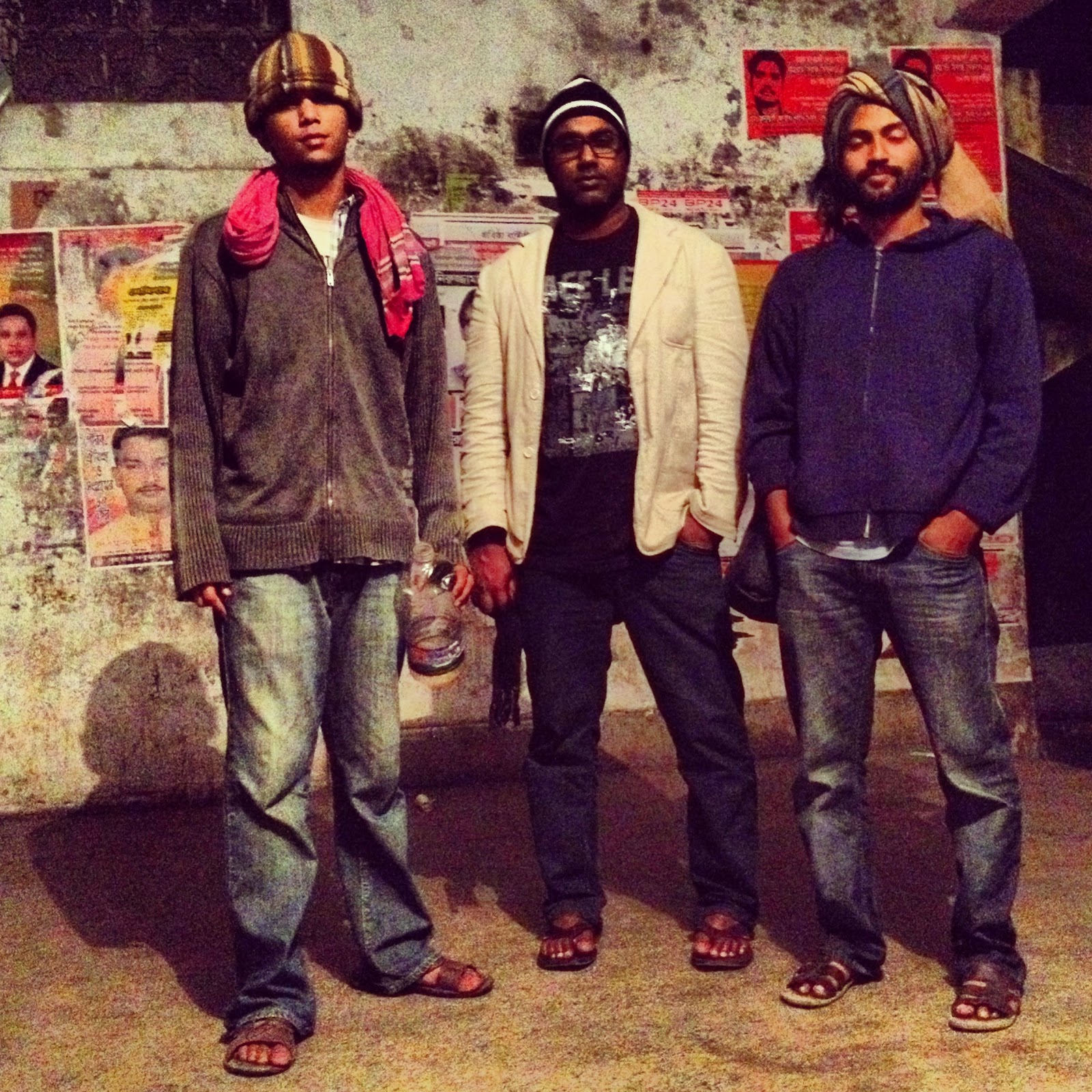
My Bengali brother was the Grameen guide for our study group, a jovial fellow by the name of Nahid, known to his friends as Shovon (meaning "handsome"). He was responsible for co-ordinating our group from the Bangladesh side, and served as our interlocutor with other Grameen departments, as well as purveyor of Bangladesh culture. From our first proper chill session after dinner on Christmas Eve, it was clear that Nahid and I understood each other on a common wavelength.  


The Bangali term for brother is spelled bhai, but is pronounced differently depending on context. 'Vhai' is commonly used in everyday conversation, to address the rickshaw driver or the tea stall man. 'Phai' is reserved for a man who you respect and whose philosophy of life you agree with, a true brother based on mutual admiration and loyalty. However you say it, Nahid has been my bhai since day one.  

We saw each other nearly every day I was in Bangladesh, and had hundreds of cups of tea together. Nahid has taken care of me like family, and with him I shared just about every idea I've ever had. Through our conversations, I've been able to absorb what I could about Bangladesh and everything in it. By the end, I must've asked him ten thousands questions. He's always been more than happy to oblige, and if he didn't know the answer, he immediately found out. Once focused on a task, he has a never-say-die mentality and will not rest until he completes it. Needless to say he was my number one translator.  

Feeling it his 'holiest duty' to make sure my time in his country was comfortable, he helped me in every way that he could. For the first few weeks, he refused to allow me to pay for anything. Even when I tried to circumvent him, the local vendor refused my money. Being a host is an honor for Bangladeshi people, and they perform the role graciously. It was only after Nahid was broke and waiting on the next paycheck that the wall cracked and he grudgingly let me treat him. With his position in Yunus Centre and the great relationships he built in all of Grameen, he opened doors for me that I hadn't even known existed. It's a fact that, had I chosen to stay in Bangladesh, I would be completely hooked up.

Nahid was an active youth with accomplishments in acting and singing, standing out by representing the national under-19's cricket team. He attended Dhaka University (itself a huge achievement in Bangladesh), where active turned to activism, placing him in the frontline of anti-establishment protests.  

He started his career in telecom and real estate before combining both experiences to work at Grameen Telecom Trust. He then got handpicked by Professor Yunus to be his protocol officer, arranging the big cheese's international schedule and visas. I surmise that Nahid was chosen specifically for his tenacity and resourcefulness, essential when dealing with embassies and consulates. (Of course, if he considers the task unimportant, he will forget about it, repeatedly. It was rather amusing.)

In addition to various duties, last year he assumed the task of guiding the international researchers, students and VIP visitors that come to study and intern with Grameen. Of all the countries he's hosted, he says that our HK group was the most memorable. And of course, he's never made a friend like me (his words). He was excited to show me his hometown of Jessore, 8 hours west of Dhaka. He invited me into his family home, and when I turned up extremely sick, his friends and family took good care of me. I hit it off especially with his cousin (also named Nahid, nicknamed Razon) and his best friend Ifty.
Under the jolly surface there was a somberness to Nahid, due to the tragic loss of his mother at a young age. But you could never tell, and he has a great relationship with everybody, with numerous bhais and friends in various circles. One friend adopted him as her little brother and even named the main character (Shovon) in her novel after him. He's a natural connector, and very persuasive. When he speaks in Bengali, I can see many more shades to his personality than when he is speaking in English. It was most interesting to watch him politicking, and in Dhaka, a conversation about politics can pop up anywhere.


He introduced most of his social circle, even new associates to me, and for the most part was a good judge of character. One gentleman named Mahmun was absolutely amazed to be talking to me, and told me that I might forget him but that he'll never forget me. It was the first time he'd spoken to anyone that looked like me before, and it was one of the greatest moments of his life. It was strange that I was blowing his mind by just chilling, but well, I didn't forget him either.

Whenever he was happy, Nahid would break out into song…usually of the Bangali folk variety, but also John Denver at times. It turned life into a Bollywood movie for me. At first it was intriguing, and after a while I got used it and didn't even pay much attention. For his part, he stopped caring or asking if I minded, and would belt out notes at the top of his lungs. One time while Bob Marley was playing, Nahid started singing on top of the song. At first I was annoyed that anyone would do such a thing, but when I listened awhile it actually complemented and harmonized with the music, and became a treat for the ears. I never thought I'd be happy with someone singing over Bob. If ever I wanted Shovon to stop singing (a rare occurrence) I'd just ask him a question.

Interspersed among the musical numbers were solemn poetry recitings (in Bangali), replete with changes in demeanor and vocal inflection. The people worship their poets and love their poetry, Nahid being no different. There is a poetic tinge to his thought and speech, evident even in his English. He's produced quotes that I've often referenced, such as "my religion is my religion", and "the barking dog rarely bites." 

The real culture shock came when I realized how much Bangladeshis love rain. Whereas sunshine makes me happy, rain is associated with melancholy emotions. Not here. The more the better, and people can be found (I've been told) dancing and playing amidst the showers, singing while soaking. Nahid likes to go trekking and even swimming in heavy rain. I'll have to see it myself sometime.


I think what made it fun was that we could both act like kids. Any boredom would lead to some new game being invented. It all started with cards, because we didn't have a common game we could play (their dominant game is call bridge). So I set up a 'basket' using a paper fruit bag, and we threw the cards at it, aiming from five or six feet away. He'd take the black cards and I took the red. We made a complete mess at first and completely failed. But after you sink one, you get hooked. After some practice, technique began to develop and it made for an interesting, competitive game. We've successfully introduced the game to new players. Picking up the cards not so fun.

I went to Bangladesh to seek Dr. Yunus, but it was Nahid that was destined to be my brother.


Thursday, May 30, 2013

Six Months On The Road...


It's been six months now since I left Hong Kong, though it certainly feels a lot longer.  I've heard that life is defined not by the number of years you live, but by the number of moments that take your breath away.  In that sense I feel like I've lived years, so much has happened.  Time is a completely different animal on the road.

I haven't been able to update nearly as much as I would like.  This is partly due to lack of reliable Internet access, as well as travel fatigue.  But the memories have been forged, and some of the words have taken shape.  It seemed appropriate at this six-month juncture to reflect a bit on all that's happened.

I'm now in Nairobi, Kenya, after a journey that has led me through 9 countries and 30 destinations.  Each country has had its unique charm, each profoundly affecting me in a different way.  There were periods of intense focus where everyday was concentrated on working for the poor, followed by lulls of relaxation and adventure chasing.  The presence of the invisible hand in my life continues to be apparent; long delays or obstacles that frustrated me ended up leading to chance meetings and once-in-a-lifetime opportunities that I couldn't have planned in my most lucid moments.  Approaching each new country brought a question mark of uncertainty, and a natural anxiety of the unknown and the risks.  Yet it continues to surprise me how fast I can adapt to striking new environments and people.  So much so that by the time I leave, I leave a part of myself behind.  Only to turn and face the journey ahead once more.

There are many things to be grateful for, which have become more apparent over time.  Firstly, the time of my departure couldn't have been more fortuitous given the path I took, because I've navigated through the world while avoiding the rainy season of every country I've traveled.    The Mekong river was a calm and invitingly placid flow when we took the slowboat, not the violent surging waters that engulf lives and threaten livelihoods.  Similarly the lowlands of Bangladesh were dry and arable, not yet flooding and disastrous.  The rains either followed in my wake or stopped before my arrival, ensuring the sun followed me wherever I went.  Either that or I was following the sun; there certainly has been a healthy amount of sun-worship, as I catalogue every sunrise and sunset I see.  2013 has so far been a year of sunsets, and still I am in awe every time I see one.  By the time I got rained on in Ethiopia, it was a refreshingly new sensation.  I relished in it, not being able to remember the last time it rained.   It just so happened that I left Ethiopia right before the onset of the wet season, arriving in Kenya just after the long rains had subsided.

Another huge blessing has been my health, which has held up through the constant changes in climate, elevation, sanitation and food.  My stomach's fortitude has been tested and prevailed to date (touch wood).  'Delhi belly' was a condition I accepted as an eventuality, but in the end I eluded it.  The horror stories about food in India leading to long-term intestinal inflammation and even suffocation are proof that my safe passage is no small victory.  Similarly, fellow travelers had shared their terrible experiences with typhoid and malaria (sometimes both at the same time), and again I've been lucky enough to avoid these.  Though I've been bitten by countless mosquitoes, the multitude of vaccines I was injected with has served me well. 

My travels have allowed me to make lifelong friends, in countries where before I knew no one.  I met my personal hero and role model, who not only did not disappoint, but imparted words of wisdom that I carry to this day.  I experienced God through multiple world religions, and been blessed by each.  I lived in huts on the beach and in a hippy commune.  I've seen the wild animals of the savannah.  But most of all, I've witnessed the conditions of the rural and urban poor, sharing laughter with the children and breaking bread with the people.  I've met those wonderful individuals who are working towards a better future for the poor, and I've been inspired by their attitudes and actions. My understanding of the problems has deepened; the same problems keep recurring in different countries, giving hope that if we can solve them for one place, we have a good chance of replicating the solution everywhere.  

Inevitably there are long stretches on the road where I am on my own.  Being alone has not equated to loneliness, but instead has afforded me plenty of time for introspection.  I've grappled with many an inner conflict about the appropriate thoughts and actions to adopt, as they apply to situations where traditional logic fails.  Sometimes there are answers, sometimes only debate.

Through it all, every day is a reminder of how wonderful the world is.  Life is still a dream.


Monday, March 4, 2013

Into The Slums


First Foray
Nothing really prepared me for what I'd experience in the Dia Bari slum.

The first sight that greeted us was an open area filled with garbage.  It wasn't a landfill, less of a mountain and more like a small lake of trash and filth.  As a group of foreigners we attracted a lot of attention before we even stepped into the slum, curious faces surrounding and following us as we made our way in.  Care packages had been prepared with muffins, fruits and snacks, but we held off on handing them out just yet.  


Led by Nahid and escorted by our drivers, we ducked into a narrow corridor, to do our first interview.  This block was lined on both sides with corrugated tin sheet, and had 12 rooms housing 60-80 people.  We spoke with a wrinkled lady holding her infant granddaughter.  Three generations of the family lived in one room, with one bed and scattered belongings.  They didn't own it, but rented through a manager from a landlord they never met.  The family uprooted to here from the village, because they had no land and thus the conditions were even worse.  At least here in the city the husband could work as a rickshaw driver or sell vegetables for money.  As bad as things seemed to us, they were unquestionably better than the old rural life these people escaped from.  Children went to school, but were expected to leave early in their teens to start earning for the family. 

With a cloud of flies buzzing around my head, I ducked into her home for a quick inspection and a picture.  There was no light inside, so it was flash, snap and go.  Cooking was done either outside the doorway or at the end of the block.  No electricity or running water.  There was however a communal low commode, a makeshift cover over a hole with little in the way of privacy.  Toddlers and shawled women wandered out to stare at us.

Halfway through our interview I thought of the bottle lights.  When we directed our questioning to their sources of light, one woman brought out a simple kerosene lamp that produced a large flame and thick, oily smoke.  They used these and candles at night, nothing during the day.  I started to tell Nahid to translate the idea of bottle lights to her, but it seemed too complicated for the moment.  After that though I started paying a lot more attention to the roofs around me.

The next house we stopped at was surrounded by a low stone wall, forming a small yard around it and the adjacent unit.  All the other kids had been playing and running around us outside, while this young girl sat on her ankles at the end of the bed, studying.  Sunlight angled through the doorway just enough so she could read, but the rest of the house was unlit.  Her name was Sunni, just like our Sunnie, endearing her to our group even more.  She was studying hard to pursue her dream of one day working for the government.   


We finished our interviews and started handing out goodies.  That's when the kids around us erupted, making it impossible to walk through some of the single file alleys.  We were happy to take pictures of them, visit their houses, hold their hands and give them props.  Some of the kids spoke rudimentary English, but the moment transcended the need for language.  Looking at the ladies in our group, I couldn't help but think of Lady Diana in the villages.  The infectious energy warmed us all on that cold winter day.  I myself got caught up in the moment and started yelling with the kids, and became a simple matter of rocking the crowd.  We told them we loved them, and to stay in school.  The kids followed us all the way out of the slum onto the streets, and waved at us through the car windows until we pulled away.

I knew I'd be back.


The Stark Contrast
My second slum experience was not as magical as the first, though very educational.

Carole and I went with BRAC to visit their operations in the nearby slums of Korail, the largest in Dhaka.  BRAC is the largest NGO in the world, and has been instrumental to the development of Bangladesh in many ways.  We got a sample of their work as we walked through the massive slums, home to some 300,000 inhabitants.  Sitting in on a microfinance group meeting was an interesting contrast to Grameen Bank's in the village, though the mechanics were similar.  Close by was a section of the slum that had been forcibly demolished by the government using bulldozers and arson.  We then went to a workshop at the maternity and child health clinic, where I learned of an injectable contraception that women prefer so as to hide it from their husbands.  Finally we visited a BRAC-run school with very well disciplined students.  Most of them wanted to be doctors.   


Everything was smoothly run, and the slum itself was in relatively good shape.  Like Dia Bari it was a dirty, corrugated tin jungle, but the similarities ended there.  In this labyrinth, avenues were lined with shops and markets, everything from food to telecoms and even barbershops.  There were drainage systems, and the electricity stolen from the grid powered the TV's in many shops.  It was a bustling neighborhood, and a far sight different from what I'd come to expect in a slum.  

It was plain to see that even within slums there is a huge difference in quality of life.  It seemed that BRAC was taking care of Korail quite well, and especially through microfinance families were working their way out of the poverty cycle, buying land in the village areas for retirement.  

I kept thinking about Dia Bari, and Sunni's sad smile. 

Saturday, March 2, 2013

Dusty Dhaka


Into the Smog
Dhaka is a beast, easily taking the mantle from Kathmandu as the craziest city I've visited so far.

An estimated fifteen million people pack into the 360 square kilometers of Bangladesh's capital, a population that swells everyday with newcomers from rural areas.   Since I'm from the big city, I go in the other direction; a metropolis acts only as a hub to access parts of the country I'm more interested in visiting.  I wasn't exactly in Bangladesh for sightseeing though, so most of my time was spent in Dhaka, the centre of the country where all the action was.

Long before I stepped onto the street from my hotel, I could hear the cacophony of traffic outside.  Trucks and buses ruled the road, and on top of cars and motorcycles, CNG's and rickshaws battled for survival, jockeying for position while all incessantly blaring their horns.  My ears got used to it quickly, and I stopped noticing the concerto outside my window late into the night.  Still, on some days the din was enough to wear me out.  

Clouds are rare, but the sun regularly shines on the city through a perpetual haze.  The dust is everywhere, and has a life of its own.  Bangladesh's soil is dusty to begin with, during dry season you cannot escape it.  Adapting to this was a taller task.  After a day in Dhaka, even with a face mask on, I would blow my nose and it would come out black.  The first few weeks, it was often a struggle just to leave the hotel.  I could handle maybe two or three hours maximum in the city before I had to retreat back to my hole.


CNG taxis: caged chaos
I wasn't adventurous enough to take the buses.  They only performed rolling stops, passengers scrambling to get on or off while the bus maneuvered through traffic.  The one time I did sit on a bus, it hit a pothole so hard that I caught a two foot vertical of air off my seat.  More often than not, exploring Dhaka meant a ride in a CNG, a three-wheeled, caged tuktuk.  The drivers are fussy, you have to hail down at least two or three before you get a ride, depending on whether they're willing to go to that district.  There is a meter, but you have to negotiate a price beforehand.  Without fail, the driver reminded me that if police should stop us, that I should tell him that we're going by meter.  Otherwise (I presume) the police will give them trouble, pending a bribe.  

Though Dhaka is a small city, traffic clogs the roads.  The only exceptions were during the hartals, 'strike days' organized by the Islamist political party Jamaat to disrupt the government.  Hartal is more effectively translated as 'shutdown', and Jamaat forced the city to a standstill by the threat of violence and terrorism.  I enjoyed the first few hartals, because there'd be no traffic and it was good to be out and about.  By the fifth hartal though things were really getting dangerous, and reports of molotovs, burning vehicles and explosions kept me from taking advantage of the traffic conditions.     

During my first month in Dhaka, I stayed at the Grand Prince Hotel.  It was the closest hotel (never mind how many stars) in the vicinity of the Grameen complex, and most of the international visitors and interns were housed there.  In between my sorties outside of Dhaka, I occupied no less than six different rooms at the Grand Prince, and settled in as part of the neighborhood.  

Barefoot to the concrete
At first there were a number of reasons why I refused to give money to the hoppers, my name for the shoeless kids begging outside the hotel.  I gave them all props instead.  But after one freezing night when they shouldn't have been out on the street, I gave them their 'quota' for the night so they could go home.  After that I kept a stack of two-taka notes at all times, ready to hit up the hoppers.  The only thing I couldn't stand (literally) was when they grabbed onto my leg, not allowing me to walk.  One night they refused my money and asked for food instead, so I bought them some sweets.  If I had fruit with me, I'd give them a choice: money or fruit.  


Letting It Settle
So far, Bangladesh is the only country where I don't look like a local.  Everywhere else, it's been relatively easy to blend in without catching the attention that attaches to Europeans.  There are pros and cons, but I try to make the situation work.  In the newer, more commercial parts of the Dhaka like Gulshan district, there were more foreigners, along with big banks and brand names.  Mirpur, where I lived, was far less polished with a gritty local character that I came to appreciate.  I picked up some basic Bengali along the way, learning enough to negotiate, direct rickshaws and follow the general gist of conversations.    

It took a while to get used to the dirtiness, but I did get used to it.  When I started out from Hong Kong, everything I owned seemed too clean and new.  I happily accumulated dirt until Dhaka, when it became too much.  The week spent in the slums didn't help.  While I tried to maintain personal hygiene, it was an adjustment of  standards to fit this new environment.  I didn't shower daily (lack of hot water or otherwise), but I did wash my hands and face multiple times throughout the day.  Garbage littered the landscape, to be burnt in trash heaps at night for warmth.  Though I felt guilty about it at first, I ended up littering everywhere.  When in Rome.

I'd read about the huge strides made by the women of Bangladesh through microfinance and the garments industry, but the daily reality spoke differently.  A conservative Muslim culture clearly dictated gender roles.  After dark, Dhaka was a city of men; the women stayed home at night, regardless of age.  There were exceptions to this rule, but not many.  Very sad.

It was a no-brainer to move into an apartment once I extended my visa;  it cost one quarter of what I was paying at the hotel.  Nahid introduced a roommate quick: one of the guys at Yunus Centre named Tanbir had a wife and son, but was living with his in-laws and wanted a place closer to work.  We found a house even quicker, putting down a deposit in two hours.  

Space was ample in the 3-bedroom, 3-bathroom, double balcony flat.  Even the address was boss: Road 1, House 1, Flat A1, Mirpur-2.  Landlords usually rent to families and rarely to bachelors, but this became a non-issue as Tanbir has a family.  I couldn't have rented for just one month on my own, but Tanbir was willing to take the place for three months.  He filled the house with his own furniture, including a large bed and sofa for my room.  A domestic helper that came in every other day.  The kicker was that, because Tanbir was a family man, he couldn't really leave his family.  The entire three weeks I was there, he managed to sleep in his room once, instead coming over after work to hang out for an hour or so before heading home.  I couldn't have imagined a sweeter housing situation.

The Gamechanger
Once I moved in, the first order of business was extermination.  There was an uneasy truce with the mosquitoes while I was at Grand Prince, but this was my house, and I wasn't going to be terrorized.  The cockroaches also had to go.  In the first two days, I must've killed 200 mosquitoes by physical then chemical means.  Once I powdered the kitchen, 21 cockroaches turned up dead or dying the next morning.  

The roaches were big and ugly but stupid.  By far my deadliest enemy was the mosquito, and once I got an electrified swatter, it was on.  Every night was a glorious battle, and I kept score.  These little suckers were organized and extremely intelligent, coming at me using guerrilla tactics.  Like ninjas, they preferred to hide until I settled down to use the computer, then sneak up and bite my toe or any exposed skin.  They would also escape via subterfuge, instead of flying into open air and getting fried.  They certainly won my grudging respect, if not their lives.  It was a matter of survival, and I didn't sleep soundly until I killed every single one.    


The new neighborhood was much quieter than around Grand Prince, but no less dusty.  Options for food were even more limited, and I ended up averaging 1.5 meals a day.  By this time I could eat whatever the locals ate (mostly) and drink the water they drank.  It was more a combination of food stalls closing early, and my laziness.  


All things considered, it was comforting to finally stay in one place I could call my own, to fall into a bit of routine.  I even hosted a Chinese New Year / housewarming party, with a CNY birthday cake and popping bags of muri.  Last time I had my own apartment was over six years ago in Toronto, and I've never lived on my own.  Maybe because of this, Dhaka started feeling like home, and I was sorry to go. 


Ridin' in my Rickshaw

Monday, February 4, 2013

Operation Blanket Drop


The First Cold Wave
A cold wave hit Bangladesh on the 7th of January and plunged the country into its coldest temperatures in 40 years, down to 3 degrees Celsius in some areas.  The people in the rural and remote regions especially were not well-equipped to handle the spell, and 82 people across the country died within a week.  

When this happened, I had just returned to Dhaka from Jessore feeling ill, in sore need of rest after weeks of nonstop travel.  During the coldest days I stayed mostly in my hotel room, and when I reluctantly stepped out into the city it was biting cold, but not life-threatening.  Dhaka is roughly on the same parallel as Hong Kong, so the winter is comparable.  As a large city it would certainly be warmer than in the villages.  But the fact that people were dying preventable deaths in this weather was terribly sad.  I was sick myself and felt weakened in the cold, but I had warm clothes and a blanket inside the comfort of a hotel. I couldn't imagine what it would like to be ill-equipped in the open fields at the mercy of the wind.  


Inception
I met Feroz the day after most of the team left.  Clive stayed behind for one more day, and he had lunch plans with Feroz, with whom he had mutual friends in the social world.  We all went for a delicious home-prepared lunch at the house of Feroz's relative Mintu, and politicked for several hours.  Feroz provided a unique perspective on politics and development in Bangladesh, different from the Grameen and BRAC narratives to which I'd been exposed.  

After that, Feroz and I kept in touch and during the first days of the new year, he showed Carole and I around in Dhaka University and Dhaka Zoo.  Though he does have an infectious laugh, Feroz tends to be on the serious side, especially when he pinpoints some problem or flaw in the system that must be fixed.  Born into a military family, he went from "farm chicken" to hard-headed youth under his father's authoritarian parenting.  He eschewed medical school to study sociology in Dhaka University, but it was in student politics where Feroz found power.  He immersed himself in the life for a few years and attained a high status within his hall, with troops at his beckon.  This proceeded until a close encounter with a rival faction led to a near-death experience.  Examining his life then, it became a turning point that led to a complete reversal of his life.  He went into a self-imposed exile to cleanse of his former corrupt ways and begin anew.  

Feroz then joined the Rotaract Club of Dhaka University, where the managerial and administrative skills he'd picked up in politics served him well.  It was here that he began his social and development work focusing on young people, serving in various leadership capacities over the last 12 years.    Since then, he's been at the head of Lifelong Education And Development (LEAD), a network of 300 youth leaders across Bangladesh that focuses on "developing young minds for global peace through education on good governance, human rights, access to justice and other relevant issues."

After the cold wave hit, on 10th Jan Feroz put out a plea on Facebook:

"Bangladesh experienced 45-year low temperatures killed at least 70 people international online news (reporter Yang Wei Ming): 10th according to Bangladeshi media the dawn daily reported that Bangladesh temperatures dropped sharply over the last week, 45 years to the lowest temperatures, resulted in at least 70 deaths, deaths were mostly children and the elderly. 9th Dina are the pool region in northern Bangladesh meet the minimum temperature for 45 years, 3.2 degrees Celsius. Bangladesh Meteorological Department Deputy Director Shahe·alamu said that currently this cold snap will continue for two, then temperatures will rebound.

But after the 20th of this month, the country will celebrate the winter cold spell during the second. Shahe·alamu also said, is located in the subtropical regions of Bangladesh lack experience and prepare to respond to cold, so the sudden cooling will result in more deaths."


"Bitter cold in Bangladesh. Some part of Bangladesh experiencing 3 Degree. Many poor people died last few days. Need more winter cloths for them. Some of our young volunteers collecting winter cloths and donating to that area. Please donate your extra cloth ASAP."


Carole had gone back to Hong Kong by this time, but she and I both answered Feroz, and our newfound friendship immediately became partnership as the planning started.  If the next cold wave was coming on the 20th, and we wanted to put blankets in people's hands at least the day before, then we had 9 days.  We reached out to the EfG team, who would raise funds in Hong Kong.  Feroz would handle local distribution through his youth network and political connections, whichever district we chose.  I would advance the necessary funds first due to time constraints, and reach out to the Grameen interns as well for support in any form.

Time was ticking.


Planning
Since the number we'd be distributing wouldn't be huge, we decided to focus on one area.  In the next few days, we considered six different districts and evaluated our options in terms of logistics.  All the areas would be in need, as the number of people affected by the cold numbered in the millions across the country.  We finally settled on Shagata in the northern district of Gaibandha, focusing on the people living in the char areas.  

Char (or chor) is the term for lowlands in regions of Bangladesh that are habitable and arable during dry season, but entirely engulfed by the raging waters of the river during wet season.  This is not uncommon in Bangladesh, where 80% of the country is lowland, only meters above sea level.  Land erosion constantly changes the landscape of the country, and once-rich landowners could have everything wiped out in a day. The people build houses and settlements in the char areas because there is nowhere else to live, and every year they watch their homes destroyed, as they head to higher ground or build new temporary homes on bamboo supports.  

These were the 'hardcore poor', even in Bangladesh.

The char people
We looked to Grameen Uniqlo at first for low-cost blankets, but unfortunately they had stopped production for the season and had no stock.  We then got some samples from Grameen associated factories, which were inexpensive but of lower quality.  The blanket was too thin and frayed easilyy.  Finally we found some samples of export-quality blankets, of a soft polar fleece type material.  These were much heavier and of better fabric.  We negotiated down to 220 taka (USD2.75) per blanket, and ordered 800.  Through the interns at Grameen and especially Kei from Japan, we were able to increase the number to over 900.

The mechanism of distribution was crucial.  We needed to efficiently pass out blankets while maintaining order.  There was precedence for conflict and violence among the people as they scrambled to get blankets.  Feroz had also once tried throwing blankets from a vehicle to homeless people sleeping on the street.  People would then run after the truck collecting all the blankets.  We looked at a token system whereby volunteers would pass out tokens among the villages, one per house and the people would come to designated spots to collect their blankets in exchange for a token.  Local political leaders would provide information on where the poorest were, but this wasn't always reliable.  

Finally Feroz proposed that we go through the schools.  The people who were dying most from hypothermia were children and the elderly.  Every family would have both, so by going through the schools we could ensure the families would each get one, and the blanket would go to whoever most needed it.  We would also have student lists from principals or teachers to keep it honest.  Or so we thought.     

Feroz came up with the idea and name for the Hong Kong Bangladesh Friendship Society, and we envisioned the flags on the banner from the very beginning.  It made for a nice picture.  He had some of his young fellows at Dhaka University design and print the banners, including a smaller one to represent Japan and their contributions.  The Japanese flag side by side with the Bangladesh flag is fitting, and well represent the close and friendly ties between the two nations and peoples.  

Before we placed the order, we went to the factory to see if the goods matched the samples.  We took all the blankets they had, and ordered a few hundred more to be made with a better material.  I went to the bank to take out the cash, and ended up at the ATM withdrawing the maximum per transaction limit of 20,000 taka, eleven times.  (This alerted the security and fraud department at HSBC and they froze my account, I would later find out.)  I stuffed the stacks of notes into a manila envelope, then looked around as I put it into my bag and headed to meet Feroz.  I'd handled larger sums of cash before but compared to my daily living costs here, it seemed like a lot of money.  I still had some hesitation when I handed over the money, but we'd come too far.  


Pick Up and Delivery
I decided to make the pickup and night trip up with the truck to Gaibandha.  I wanted to personally ensure the quality and quantity of the blankets, and make sure nothing happened to them along the way.  The rest of our team would go by two cars in the morning and arrive in the evening.  I started out from the hotel at 2:00pm to get to the truck station at 3:00pm.  Feroz sent one of his young fellows, Ikram, to meet me at the truck station and accompany me so I'd have a local contact in case I needed translation.  Even though Ikram had an exam in two days, he still volunteered for the 12-hour ride up and the 8-hour ride back to Dhaka the next morning.  He was a true soldier for the cause and also very enthusiastic, almost cheering every time I spoke Bengali.  

But this also meant we both had to ride stuck in the middle between the truck driver and his assistant.  It was incredibly tight, and no position I sat in was really at all comfortable.  Ikram had it worse, as he had to sit with one leg on either side of the gear-shift.  The assistant's job at the window seat was to loudly heckle all the vehicles that we were passing to get out of the way, though why they wouldn't use the horn like everyone else was beyond me.  He also served to warn the driver about speed bumps, a vital function as it turned out. 

We drove an hour from Dhaka to Ashulia where the factory was, and it took another hour to load and secure the goods.  I had gone there fully intent on counting every blanket, but since they came in bundles of twenty it made calculations easy.  Leaving the factory at 5:00pm, we technically should've made it to Gaibandha around midnight.  We went the first four hours without stopping, and when I wasn't talking to Ikram, my thoughts were with my newly born godson Sebby and his family.  By the end of that long stretch, it got to the point where I couldn't sit still and changed positions every ten seconds to try and get not uncomfortable.  

Finally we arrived at a truck stop and had dinner.  After that, stops were more frequent, the engine stopping a few times.  At around midnight, the driver stopped the truck and immediately passed out.  There was nothing to do but jump out, take a break and let the man catch a nap.  I'd rather we get there late than have him drive dead tired.  I also wasn’t eager to get back into the damn truck. 

So we took tea at the stall across the road and watched some horrible Indian zombie movie.  Everyone had a good laugh at how cheesy it was though.  After the movie ended we were back on the road, and it was my turn to finally sleep.  We almost got into an accident, and the assistant yelling and the driver slamming on the brakes jerked me into semi-consciousness.  We barely missed hitting the vehicle in front of us.  I then went back to sleep.  We finally got there at 3:00am after a 13-hour odyssey.  

Loading the truck

The Char Schools    
I woke up after four hours of sleep to a beautiful sunny day, and convened with the rest of the party: 

- Feroz's long-time local collaborators Mintu, Daizy, and Rahman
- Kei and her friend Naoki visiting from Japan
- German volunteers Inga and Chris, who Feroz was hosting 

Mintu is friends with the police superintendant of the Gaibandha district, who personally got involved with the effort once he learned about it.  He escorted us along with half a dozen of his men to keep the order and prevent chaos.  Cutting an imposing figure, the man was used to having his orders followed, bellowing out commands left and right.  I was later surprised to hear him speaking at a normal volume.

The road to the chars was elevated a few meters above the rest of the land, much of which was used in rice plantation.  If I wasn't told, I would have no idea that the lowland that stretched almost to the horizon would be submerged in water, and that what I was seeing was the riverbed.  

The uniformed policemen with wooden sticks seemed superfluous as we pulled into the first school.  The kids had all lined up in orderly fashion and the national flag was flying.  We set up a table to pass out the blankets one by one, moving bundles from truck to table.  Soon a square formed with the mothers and younger siblings looking on.  This simple system worked well for about ten minutes, and some of the students thanked us, saying 'as-salam alaykum' as they received their blankets.  

Unfortunately, a few kids slipped the front of the line, and all of a sudden everyone rushed forward, surrounding us in a din of children and mothers.  The teachers and policemen attempted to maintain some semblance of order, the latter using more forceful means than I thought necessary. Some members of our team who spoke Bengali refused or pulled kids out of the line who were double-dipping, and those clearly too old to be attending this school.  Feroz later told me that this was the hardest thing to do—telling someone they couldn't have a blanket.  I'm glad I wasn't making those decisions.  I'd seen the kids jumping the line, and the pensive mothers placing their toddlers in the table’s vicinity, but I couldn't turn them away myself.


By the time we left, there was no order remaining, only a crowd.  I scanned the sea of faces and detected mostly confusion, which in turn confused me.  We beat a hasty retreat and headed to the second school, which was much smaller.  It held three classrooms, and it was a simple job of handing out a blanket to each student in the school.  We had more time for photo opportunities and interaction with the kids, but outside there amassed about twenty or thirty mothers holding onto toddlers that wouldn't get a blanket if their child did not attend this school.    Alas, there is no such thing as a perfect system, but the second stop was so smooth that I thought we might've figured out the formula.

Except that the third school had amalgamated students from four different schools in one area to save transport time.  We couldn't get to the school by truck, and had the blankets transferred to bicycle wagons, the final stretch carried on foot.  The children were lined up in rows on the grounds outside the school, which was fine.  But because there were so many students, the teachers decided to put all the kids of one school into a classroom and have them come out one by one and pick up a blanket on the way past the door.  

Having sixty or eighty kids of different ages in one classroom is already a bad idea, but somehow there was no adult supervision in the room.  We heard the screaming and chaos before we even saw them.  The kids were like caged animals, waiting to burst out and excited about their new gifts.  When they saw the blankets they stampeded the door, and some of the smaller kids got trampled underfoot.  Children were walking out crying painfully, not even caring if they got a blanket or not and looking only to escape.  It was a sickening sight to watch.

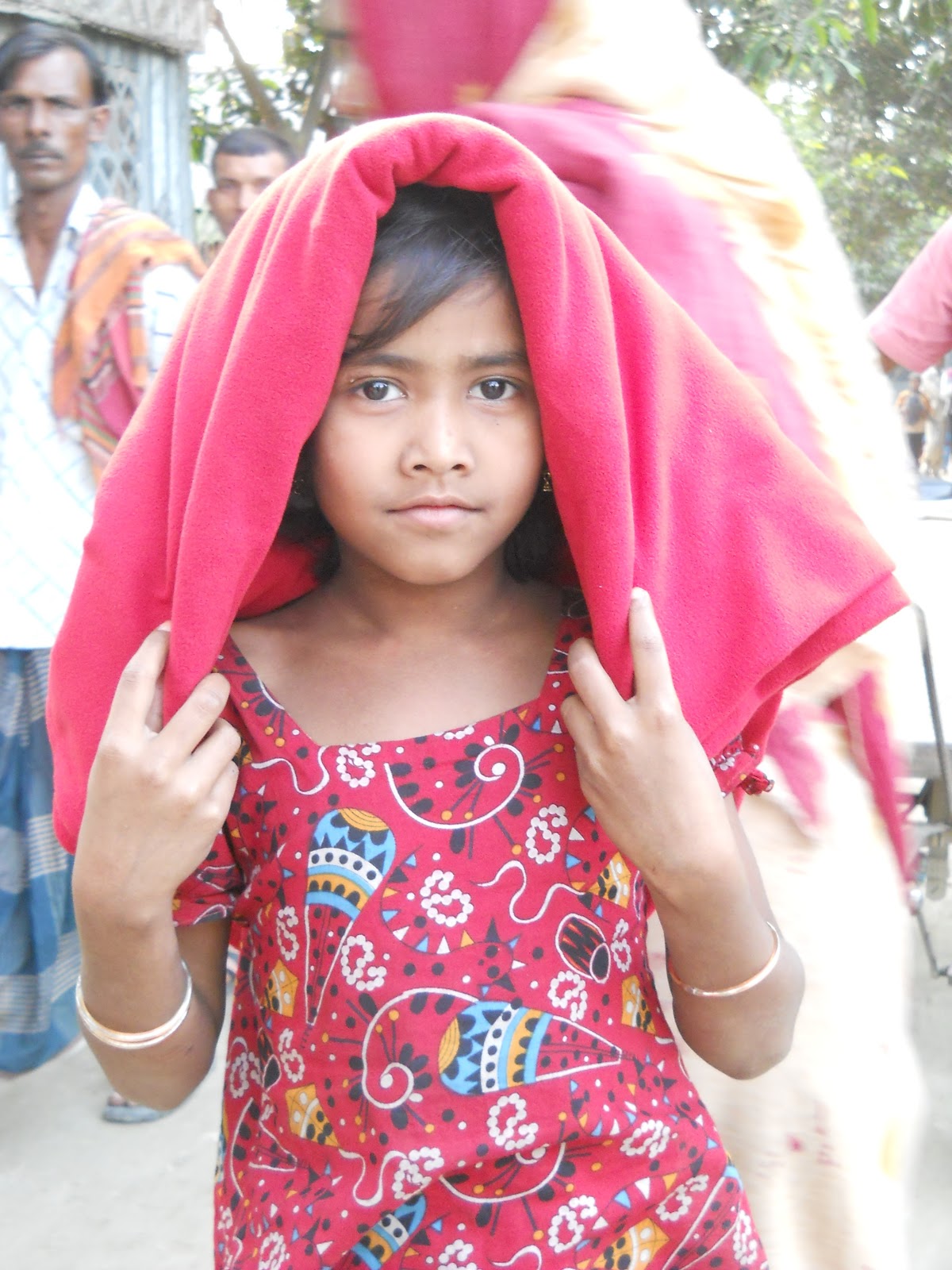
Since I wasn't the one handing out the blankets, I walked off to see how the kids who already got their blankets were getting on.  They seemed much happier and were generally more responsive than the first two schools.  The students happily posed with their blankets, and wrapped themselves in them.  But amidst the smiles and toothy grins were also faces that had much sorrow written on them, young eyes that had seen a hard life of suffering.  

The smiles made it all worthwhile
However, as far as our efforts went, all was well that ended well, and as we left that last stop I looked back at the hundreds of children hugging onto their blankets, or handing them to their waiting mothers, or wearing them like capes to run after us.  It finally felt like we were doing something good, and for a moment it was okay to not feel guilty about all the people I saw and couldn't help, or those who would die in the upcoming cold wave.  

Feroz was the happiest I've ever seen him.  More than anyone else he worked the hardest on this project, and yet he was content to give all the credit and photo opportunities to others.  He was an incredible partner to work with and I really appreciate his dedication and attention to detail.  He'd even been sick during the planning process, but didn't allow it to affect him.


The Last School
We had blankets left over, so the next day we decided to distribute them to a nearby NGO-run school before making our way back to Dhaka.  This last school was named after a famous Bangladeshi lady poet Suphia Kamal, who was known for her advocacy of women's rights.  It was by far the most organized and orderly of all the Gaibandha schools we visited; though we'd given them short notice, they had a welcoming party ready for us with bouquets of leaves in hand.  After a quick tour of the classrooms to chat with the students, we invited the nursery, 1st and 2nd grade students to come out into the schoolyard.  They had a playfully light military routine to get everyone in formation.  We quickly distributed blankets to them, and I spent some time with the older kids who had just arrived for their classes.  All they could say to me was 'Hong Kong, Hong Kong', so I had them chanting that for a while.  They pointed at my ripped jeans and said 'fashion, fashion' but I told them they were just ‘old, old’ and that mosquitoes bit me where the holes were.  That got them laughing.


Aftermath
Press releases were drafted by Feroz and sent to a local Bangla and national English newspaper.  On 23rd Jan the article (http://thenewnationbd.com/newsdetails.aspx?newsid=64034) appeared on page 3 of New Nation, an English-language daily.

The warm weather held out for a few more days, and the cold came on 25th Jan.  Temperatures in the north dropped to as low as 4 degrees Celsius, though fortunately this time the cold wave only lasted two days.  People were also much better prepared, though 8-10 people still died. 

It's worth nothing the other efforts that were made to alleviate the cold, and the actual size of the problem:

"The Department of Disaster Management (DDM), Ministry of Disaster Management & Relief and the Prime Minister`s Office along with UNDP, national and international NGOs, Red Cross/Red Crescent, and Dutch-Bangla Bank have distributed over 644,000 blankets to reduce the sufferings of cold wave victims...However, the gap analysis undertaken by the Department of Disaster Management with assistance from UNDP Early Recovery Facility reveals that additional 1.5 million households are still in need of blankets and warm clothes to minimize their suffering." (http://reliefweb.int/report/bangladesh/undp-complements-national-efforts-minimize-sufferings-cold-wave-victims)

As a Canadian, I was happy to learn that Canada did their part as well, "providing 39,000 blankets to 15,000 families suffering from unprecedented cold weather in Bangladesh through immediate assistance from the Canadian International Development Agency (CIDA)."

Skeptics may say that in hindsight it was a wasted effort to provide blankets to those who didn't end up really needing them.  I would say that we executed on a plan based on the consensus weather forecast, but that our plan was set against the backdrop of a bigger picture.  The entire effort was based on the hope that more people would be warmer for the cold wave that was surely to come, on the hope that less people would die by hypothermia.  We ourselves could only help 900 families, a mere drop in the ocean, but the weather itself defied all forecasts to keep the people warm.  As is the case in the rainy season, the people of the char are at the mercy of the elements, and live or die by the will of God.  In this case, I think God heard the prayers.

It’s now time for the home team to play, and the guys and gals in our EfG study group are working hard to raise money for the cause.  A Facebook page has been created showing some truly moving pictures of the children, pictures that speak for themselves, invoking emotions of warmth and hope.  At the EfG event on 29th Jan the HK team had a fruitful discussion on their thoughts and experiences in Bangladesh, and did some fundraising there.  A second proposed fundraiser will involve some of our members swimming outdoors in cold temperatures, to simulate what it might feel like in the northern Bangladeshi villages.  

However, there are still some hurdles to overcome, mainly along the lines that we aren't a registered charitable organization and can't publicly solicit donations.  I do have faith in my team and in Hong Kong.  I am positive that it will all work out just fine. 

To debrief, Operation Blanket Drop wasn't a social enterprise at all, more a relief effort in the traditional charity sense.  From a business perspective it actually had terrible cash-flow.  But while it may not have been social entrepreneurship, it certainly was a step in the direction of making change, and it felt like something that needed to be done.  I'm thankful that the whole process was relatively smooth, and I learned a lot about what goes on behind the scenes for even so small an effort as this.  It was fulfilling to work for the people, and to deliver on a plan.    

As for the people of the char area, my heart goes out to them.  I was lucky to visit their area on a very nice weekend, and could only imagine from the descriptions what it's like in the cold, or even worse during the monsoon season when they lose their homes.  I am under no illusions that what we've done has changed lives in the long run.  However, I do take comfort that we provided the families with high-quality blankets that will last them several years.  And I hope that more awareness can be raised about these areas, as there is little to no available information on the Internet.

Now, if only a proper solution could be worked out for the rainy season, that would be something! 

Edit: As of 28Feb2013, we've successfully raised all the necessary funds for Operation Blanket Drop.  There's even a small surplus that will go to the next projects.